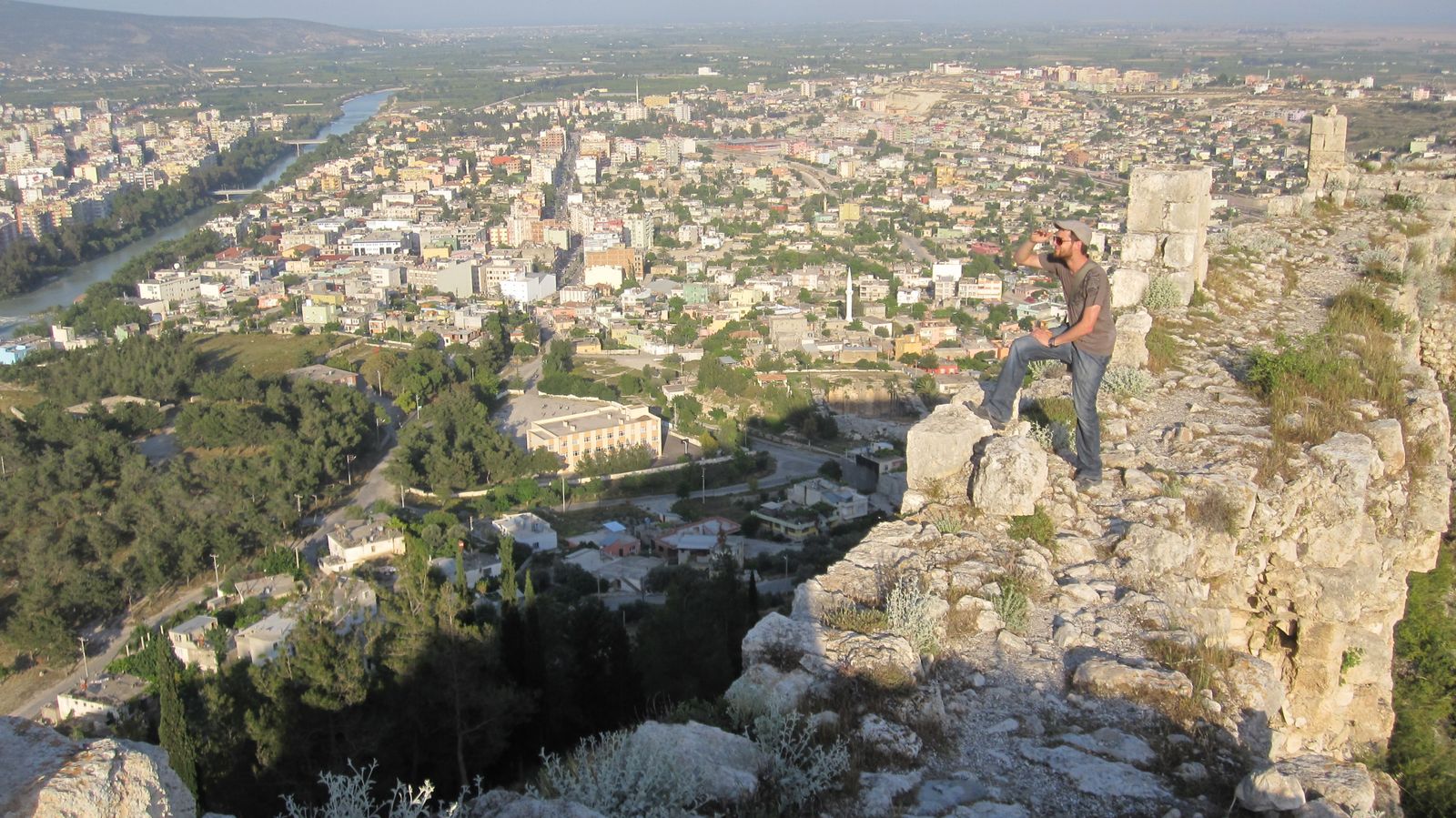
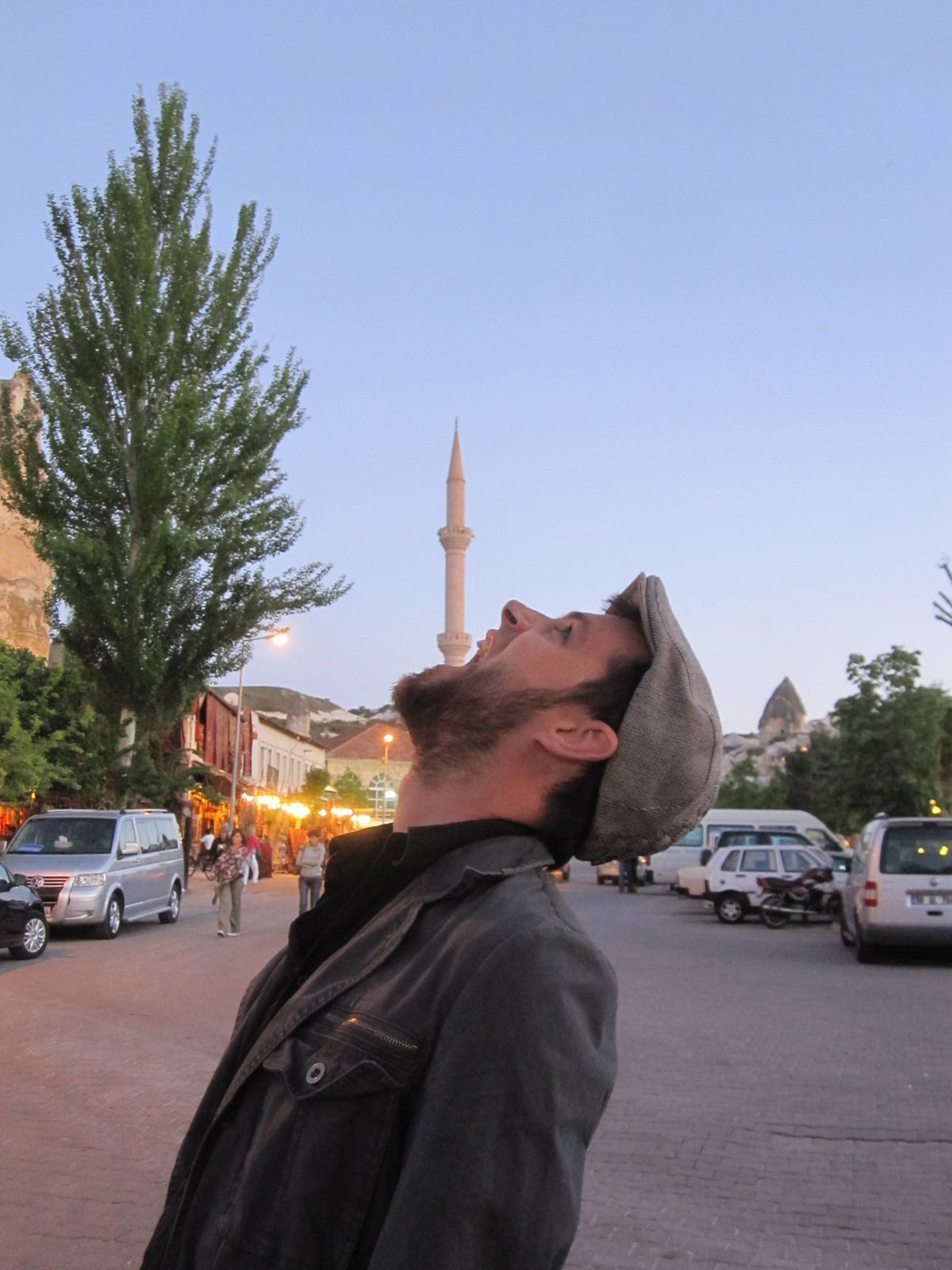
 My time with Erika is almost over, and that really bums me out. We've had such a great time and done some many fun things that I hate to see it come to an end. The upside is that we have been traveling pretty hard for the last half of her vacation and I could use some time indulging in beers and naps with the backpacker crowd once more. I haven't seen many of them since I left Syria but I think that I'm close to that crowd one more... I just need to reach the town of Olympos, famed for its tree house hostels.
The bus ride out of Silifke and towards Anamur was pretty uneventful. We noticed that the temperature and humidity rose significantly but they had a touch of that in Silifke too. One thing that's unmissable are all of the greenhouses all around Anamur. The area is famed for its banana plantations and before cheaper imports started showing up in the 20's, Anamur bananas were all that could be found in the area. It's said that the local banana is a little smalled but more flavorful but I didn't really see much of a difference when we bought some. At first I thought that it was very strange seeing all these tropical plants growing everywhere, but the place is covered in all manner of flowing plants and feels pretty tropical itself. I guess it's natural enough. If it wasn't for the bananas, I'd say the area looks strikingly like Santa Barbra, the way the shrubbed hills come down to the sea.
The guide book suggested that we take a city bus from where we were dropped off to get near the beach where many cheap pensions are found. We got a great one over top of a restaurant and within sight of the surf, though actually here the waves are tiny all the time. It's got a real sand beach and the water felt pretty tepid to me. I'd swim in that, but it was kind of late in the day and we had to rush out to see what we came here for.
 I guess that we came for two sights. One is an old castle that's built right on the water and looks pretty awesome online. The bus drove right by it but it's a long ways from the hotel and our priority was the ruins of Anamourium on the outskirts of town. After dealing with the hotel search, we took another bus back into the main town, aaway from the beach, and then wandered around looking for a bus to take us to the ruins. It was 4:30 pm so I tried first to rent a moped from a nearby place that the guide book mentioned so that we could hurry over there, but they were out and the owner tried to rent me his car instead, though it still had all his stuff and his baby inside. He also suggested that a bus would come by that could take us there so we waited where he suggested and eventually one came by. It took us most of the way and we walked the rest.
 Anamourium is built on a hilly peninsula and there is not much development in the vicinity. It's mostly covered in dry grass, but the steep areas have 6' brush threatening to grow over whatever ruins are still showing. The most impressive aspect of the ruins are the scale since there are so many standing buildings and walls and many of them are still identifiable as to their use. Also, not very much reconstruction has occurred so it all looks very natural. Also, the buildings are almost entirely made of brick, small stones, and cement and there is very little marble to be seen. Roman buildings made with cement tend to survive the earthquakes better than the stone for some reason. I've heard, and seen the evidence, that the Romans had far more advanced cement formulations than we have today and it really did last the ages.
 There are a large number of smaller buildings with vaulted roofs on the hillside that the signs explain are a necropolis complex. This is where the dead are prepared for burial, or entombed, and where loved ones can come to visit. It's pretty surprising how close to town it was, but then the ancients were more interested in ancestor worship than we are today.
 Another area that struck me was the public bath. I've seen a lot of baths, but this was one of the most intact that I've seen. It was 2 stories tall, built into a hillside, and open for exploration. The domes roofs were still there, with a bit of grass on top, and there was some remaining mosaics on the floor. They looked like they were made of small square blue and white stones rather than tile. You could walk around and make out some of the rooms and the general layout. Baths are divided up into 4 main parts. One is the undressing room. The others are the frigidarium (cold room), tepidarium (tepid room), and the cauldarium (hot room). The Romans believed that it was healthy to move the body back and forth in temperature for good health, something like the Indian sweat lodges, or a good jump in the pool after the hot tub (my favorite).
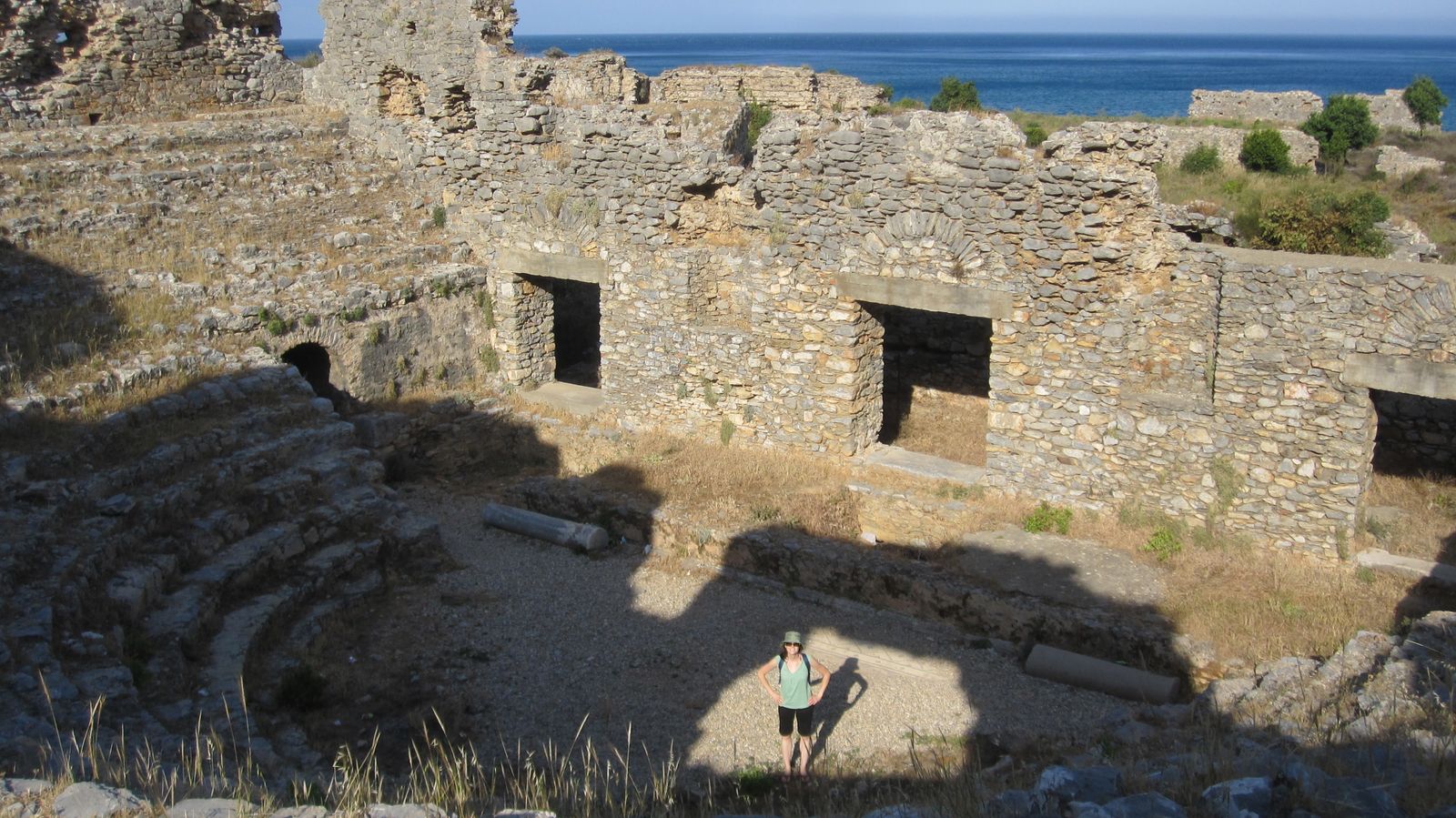 Yet another building that we enjoyed was the agora (public speaking area). It too had some nice mosaics and multiple floors. It was right next to an old basilica that looked like it was once a huge structure but it was hard to imagine what it would have looked like. One of the entrances looked like a face so we took a quick picture.
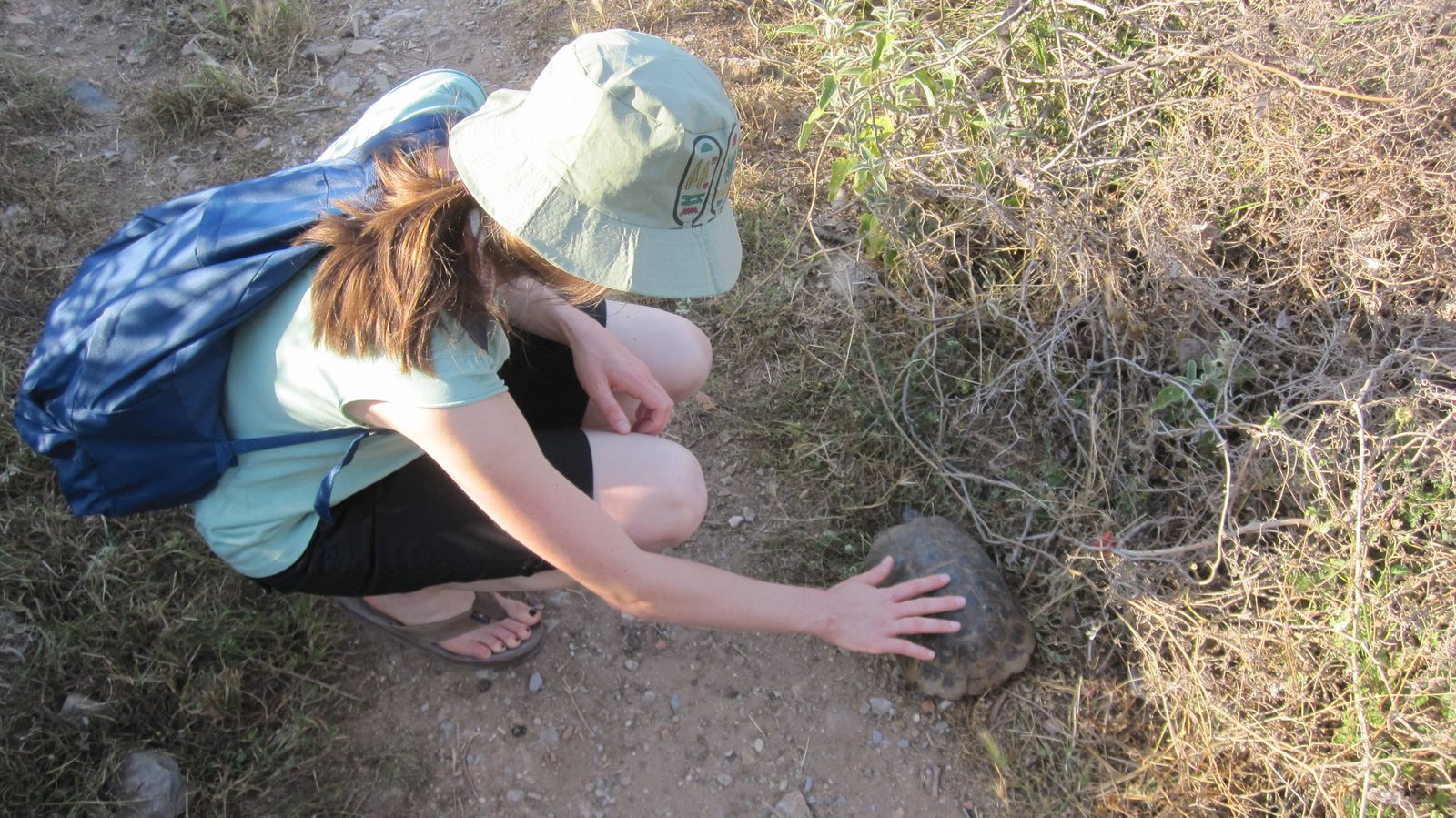 Overlooking the entire city is a huge walled fortress that runs up the side of the hill. We walked out in that direction to get an overview of the city from the sea cliffs, but it was getting near to sunset so going to the top of the hill was out of the question. I split open a melon that we bought in town and by the time we were finished my beard was just full of melon juice and it was time to get going. On the way back we found another tortoise on the trail. Why do I never see wild tortoises anywhere else?
 By the time we were heading home, there were no more public buses running so we walked a couple kilometers back to the main road and stuck out our thumbs. It was just a couple minutes before we were picked up by a Kurdish guy driving a pretty nice car. He didn't speak any English but we understood that he was from Diyarbakir and seemed pleased that I had been to so many Kurdish cities. On the way back to our pension he took us to his business to show us around. Apparently he owns one of the huge green houses but his was growing strawberries. He walked us around and pointed out it's features. The plants are grown hydroponicly in elevated troughs and he explained that the system was from Holland and that the whole place cost $150,000. We ate a lot of berries and they were really great... much better than the other strawberries that I have bought in Turkey. He filled a basket for us, gave his card, and took us back to the pension. We had some kebabs for dinner and stayed up late finishing the previous blog post.
 The next morning we took the first bus to Alanya, further west along the coast, but like all our other buses it left fairly late at 10:30. We saw Alanya from the window and it looked terrible. It's a big resort town, but it really specializes in renting condos rather than package resorts and the city planners put the highway next to the beach and the hundred or so huge apartment buildings all looked exactly the same. The guide book said that there was an area with a castle on a hill and some cafes leading up to it but the area looked so horrid that we got the bus driver to let us stay on longer until we reached the next city of Side further west, whıch thıs pıcture ıs actually of.
 Side is also a resort town too, but much easier on the eyes. It's got an old town on a low peninsula that crawling with old Roman ruins and tourist shops. The beach is just north of it, and that area is lined completely with package resorts and beach bars. It's still a tacky town and looked like Cancun for the 40+ crowd but at least it had a good beach. We wandered around for a good long time dealing with fetching bus tickets for the next day, and finding a cheap hotel but soon we were ready to hit the beach.
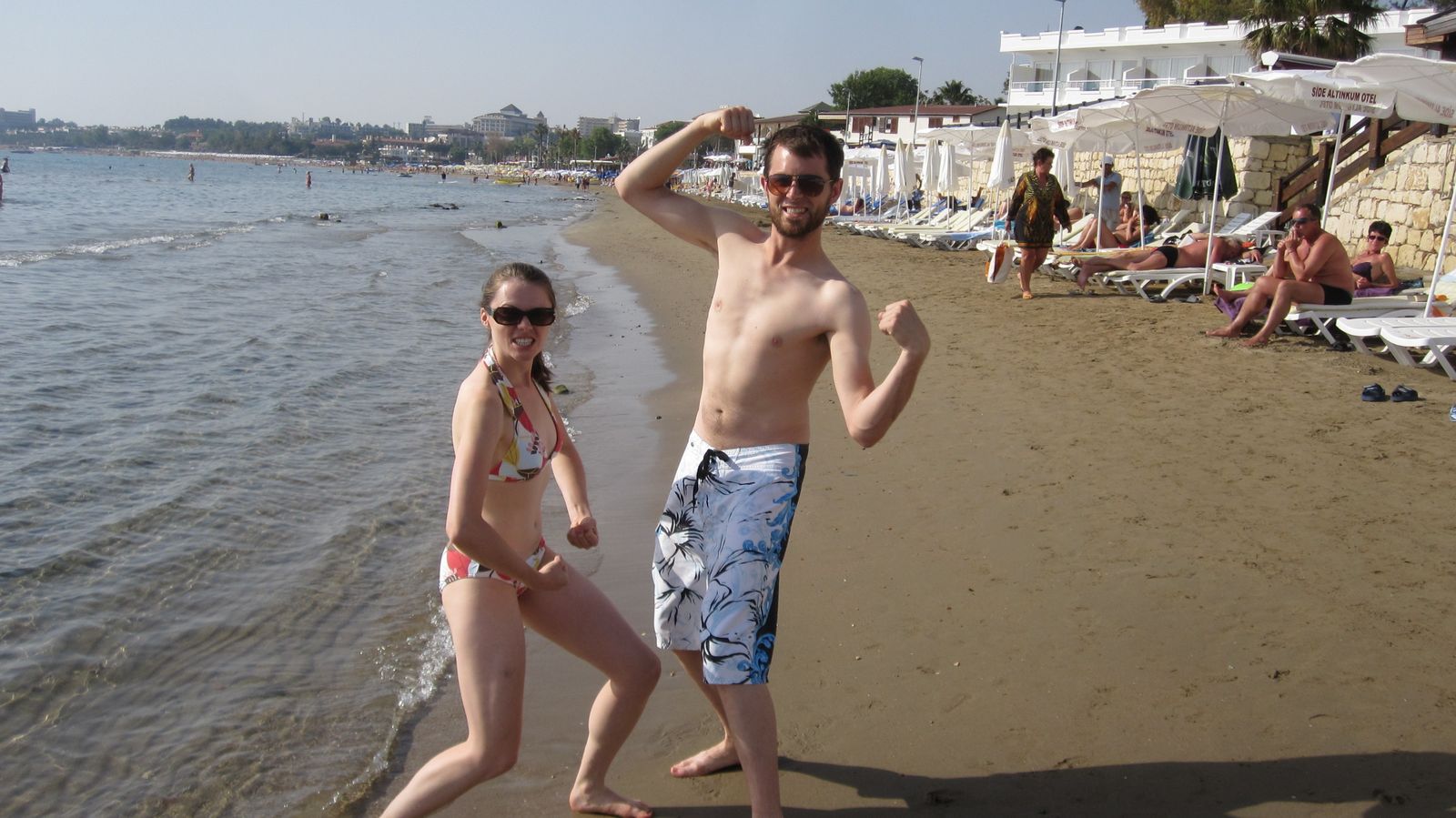 The beach had brown sand, a few rocks, and the water was pretty warm. It helped that it is so shallow that it hit my waist 60 meters out. Like I said earlier, it was a pretty old crowd of mostly Germans and Russians so we tried to avert our eyes as much as possible. There were many parasailers in the air and walking down the beach we were approached many times to buy such things. Everything there is priced in Euros and we had a few 2 Euro beers. The Euro is pretty weak right now so we did the math and it was still cheaper to pay in Turkish Lira than to go buy Euros and pay in that.
 We had dinner at a back alley restaurant that only Turkish people eat at. There was a Kurdish guy eating there and he told us how strange we were to eat there but the food was good and it was half the price of any of the tourist places selling their huge $16 dinners. I had a glass or Ayran (salty yogurt drink) with dinner but Erika doesn't like the stiff. I guess that I've just gotten used to it... it's the cheapest thing to drink that isn't water so why not enjoy it?
 The next day we had to get back to Konya but we got a late bus that gave us time to explore the ruins more until noon. First we saw the huge theater from atop a small hill nearby. They wanted $7 each to go in, but Erika and I have seen dozens of old theaters so that's not happening. There were some pretty great poppies growing in large clusters but it's just the 3rd type of wild poppy that I've seen on this trip;
 maybe the best though. I read that there ıs a town not so far from here that grows poppıes commercıally for medıcal grade opıum. There's only a few towns that are lıcensed to do that.
 Next we saw the old agora that was made of marble columns and had a lot of repairs. In antiquity there were dozens of imperial statues overlooking the many debates that ensued there but they've all been carted off. This city like all the roman cities on the south side of turkey was abandoned for a very long time because of frequent pirate attacks in the 3rd-7th centuries by Arab sailors, like Sinbad.
 The most famous site in Side is the old Temple of Apollo and the Temple of Athena that sit next to the water near the small harbor. There is a section of standing columns and a veritable horde of tourists that only the tranquility of the sea behind them can distract you from. I waıted a good long tıme to take thıs shot wıthout many other people ın the frame.
 Tourists shops in Side all sell pretty much the same things: knockoff fashion items. There are shoe, clothing, purse, watch, and jewelry shows all selling the latest Prada, Ed Hardy, Puma, and other junk. I needed to get some sandals so we let ourselves get pounced on by the pushy salesmen. I found some low key leather thong sandals with no showing brand names and we went to many shops to haggle the price.
  Most of the salesmen started at $60+ but I ended up buying them for $22 from the shop that I thought had the nicest salesmen. I was told that this was a price usually impossible for the Europeans but Americans (and backpackers for that matter) are a rare item here and I bargain harder than the regular type. That made me happy but who knows how true it is. I was a pretty soft bargainer when I was in Egypt and I paid way too much for some tacky sun hat. Erika got some shoes too but avoided the handbags on this, her 2nd trip to Turkey.
 It was a very long trip back to Konya through some pretty rugged mountains with sheer cliffs and snowy peaks. I thought the area was very beautiful but the mountains dropped away eventually to reveal the sprawling city of Konya once more. We got the cheapest hotel we could find unlike the last time we were in Konya.
 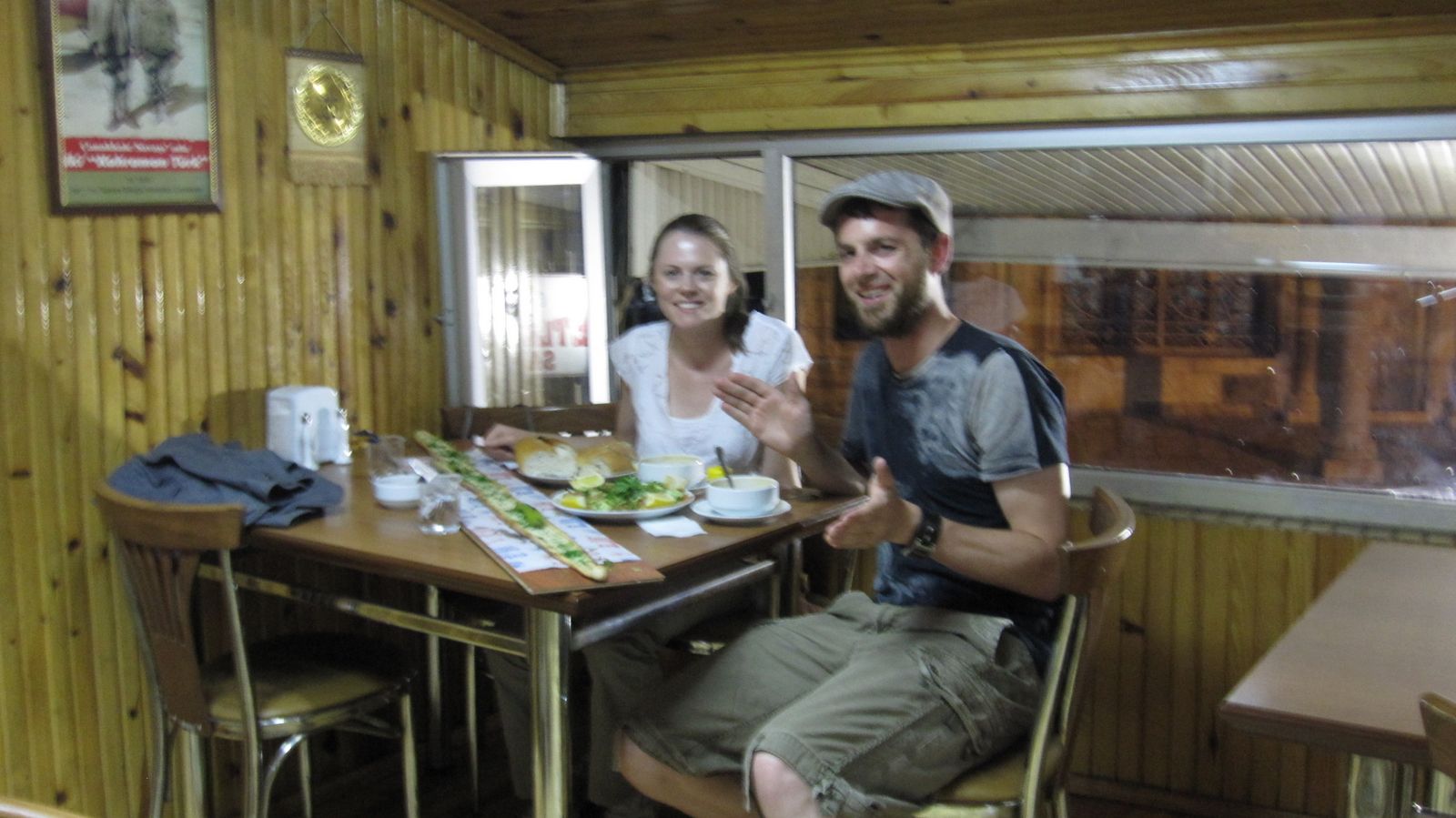 Dinner was at a local pide (long skinny pizza) shop. We got a cheese and pepper pide, chorba (lentil lemon soup), and a salad. Erika left at 4AM to get a taxi out to the airport and I already miss her, though it does give me some good typing time on the bus where I am now, using the free WiFi. I caught the first bus to Afyon at 10 AM.
 Erika and I have done a few trips together including to Belize/Guatemala, London, and now Turkey and many more with our parents. She's a great travel partner because she's energetic, loves to try new things, and is as comfortable in a 5 star as a 2 star (so I imagine), though I didn't take her to any 1 star hotels on this trip... though I would have if I could have found one! A couple of the places we stayed in Belize/Guatemala would have qualified for a dirty 1 star. She said that she's open to coming out again in a few months if I'm still abroad, and if I'm in SE Asia maybe Rob could come out too. That would be great because he's funny and I think would help us feel a little pressure to drink more. I need a friend like that because I'm too cheap and moderate by myself, and Erika is too.
 Thıs ıs a pıcture of a man that I met on the bus today named Ismael. Seemed nıce enough. He wanted to send me an englısh translatıon of the Koran from hıs cell phone, but I saıd that I don't have a phone myself so we left ıt at that. Wow, ıt's really tıme for me to get a shave.